The Reinvention of Allegiant Air
Allegiant Airbus 320. The airline is realizing its goal of flying only A319s and A320s as part of its larger strategies. Flickr
An Air India Boeing 747. The Indian government is looking to attract a buyer. Dylan Agbagni (CC0) / Flickr
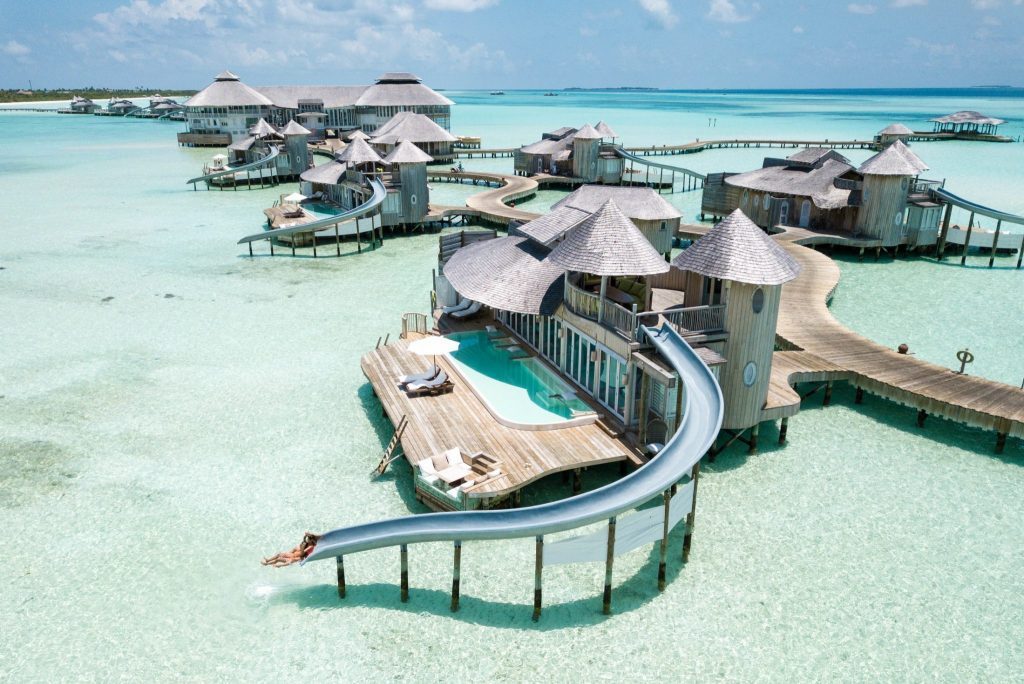
Soneva Jani, Maldives Soneva
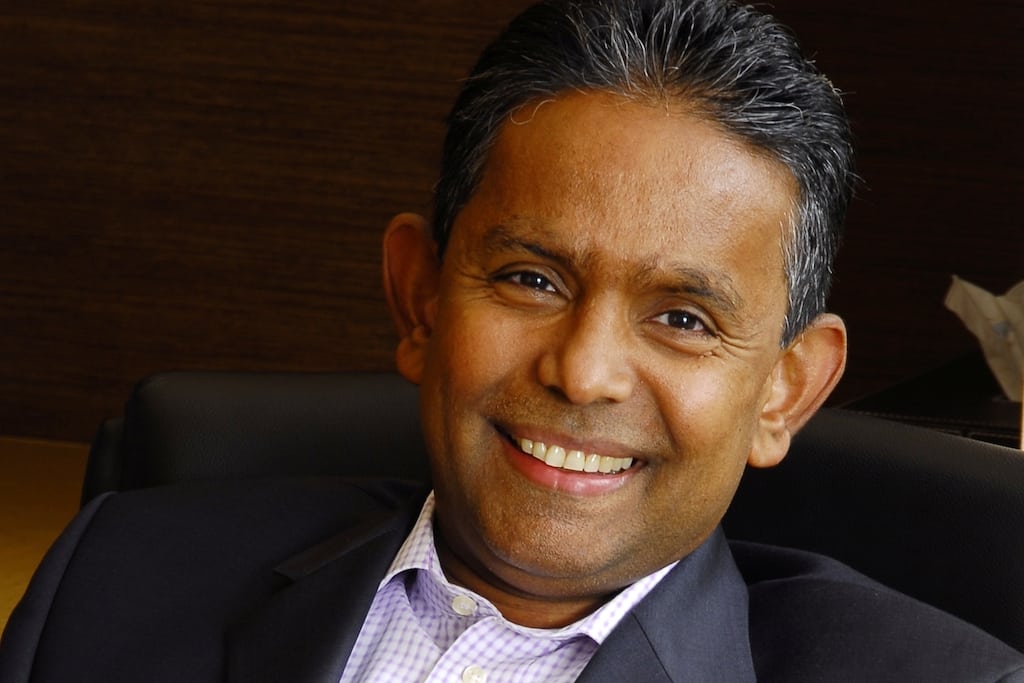
Dillip Rajakarier, soon-to-be group CEO of Minor International, while retaining his role as CEO of Minor Hotels. Minor Hotels
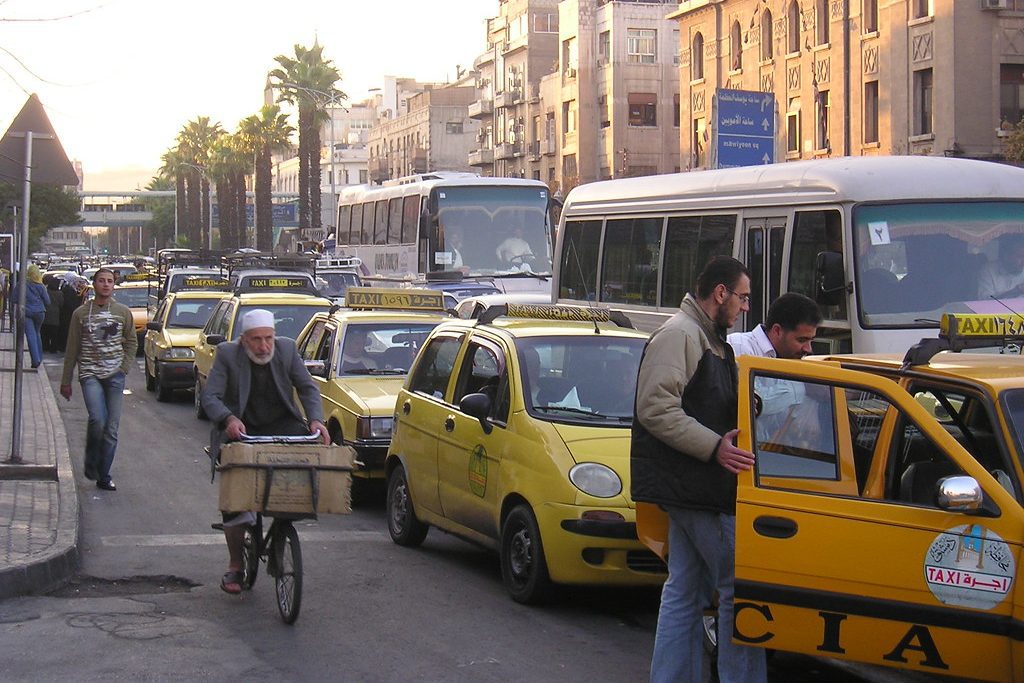
A busy street in Syria. Photo RNW.org / Flickr
In the rural village of Jinjiang, Airbnb and the Guilin Municipal Government Tourism Development Committee partnered on a one-year project that recruited globally renowned designers to redesign local, traditional stilt-style homes as functional homestays. Airbnb
Venice. The city is struggling to cope with tourism and climate change. Bloomberg
The post The Best Time to Travel to Ireland appeared first on The Blonde Abroad.
If you read travel blogs, you’ve almost certainly come across Nomadic Matt at some point. He’s another member of the original travel blogger gang, having started, just like I did, well before there were millions of blogs out there.
Recently, Matt published a new book, Ten Years A Nomad. So I decided to ask him some questions in order to get a better understanding of his own life of travel and why his book is worth reading.
Here we go…
If someone has read your blog, what will they learn from Ten Years A Nomad that they haven’t already learned?
I think the biggest take away from the book is that there is more to traveling that just the hard and fast details. On my blog, I share tons of tips and tricks and suggestions to help people travel better, cheaper, and longer. And, while I also share my thoughts on the psychological and emotional side to travel, you can only go so deep in a 2,000 word blog post.
What Ten Years a Nomad does offers is much deeper, more reflective commentary on travel. I don’t just share the how of travel — but the why. What compels us to leave home? What drives us to want to explore, to break free of the grind? What do we think we will find out there that we are missing in our lives?
At its core, Ten Years a Nomad will show people that it is possible to throw caution to the wind and make your travel dreams a reality. It won’t be easy and it won’t always go as planned, but it’s possible. You just need to be willing to take the risk.
During those ten years of travel, what’s one travel experience you hope you never have again?
Being stabbed. Can’t say I recommend it!
It happened when I was backpacking Colombia. A young kid tried to steal my phone and I wasn’t thinking and just instinctively refused, holding onto my phone as he tried to pull it away. He ended up punching me a view times before running off when I started to yell for help. What I realized a few minutes later was that those “punches” were actually cuts from a knife.
I was lucky and there was no permanent damage, though I did need a couple dozen stitches (Lesson: always buy travel insurance, folks!).
In hindsight, I should have been more careful. By no means am I blaming myself, but I should have been more cautious about using my phone in public as petty theft and robbery is quite common in Colombia.
That being said, I really did love the country and would definitely go back. I’ll just be a little more careful next time!
Who’s the most memorable person you’ve met on your travels that you only spent a few minutes with?
The first group of backpackers I met in Thailand, to this day, still stand out as such a memorable and formative interaction. Back then, I had no idea that long-term budget travel was a thing. I was stuck in the “travel is a vacation” mode of thinking, not realizing that there was a whole world out there that I could be exploring beyond just a two-week holiday.
That interaction, as brief as it was, was eye opening. It’s what inspired me to quit my job and take a year off to travel…which eventually turned into a decade of traveling the world and a career that has given me the freedom to live the life I want.
Why did you stop being a nomad after ten years?
After 10 years of traveling, I just wanted to slow down a bit. It can be hard to focus on work when I’m always on the road, and it is also hard to build healthy habits too. Exercising and eating well are much easier when you have a stable place to stay in a place where you aren’t tempted by all the new foods and drinks a country has to offer (or at least tempted a little less!).
But while I may not be a “nomad” I’m still traveling regularly. Just in the past few weeks I’ve flown to New York, Los Angeles, and I’ll be heading to London in a couple weeks for a conference. So it’s not like I’m giving up traveling — far from it! I’ll just be traveling a little less, that’s all.
(Then again, I’ve said that I would slow down my travels before and that never lasted…so we shall see how it goes this time!)
What makes travel so important to you that it took over a ten-year period of your life? For me, it’s the really small, rewarding interactions I have with people all over the world, people that I would otherwise never come into contact with if I wasn’t traveling. Those interactions are like a powerful fuel that makes it almost impossible for me to stop this traveling lifestyle. What was it for you?
Travel is the ultimate teacher. It forces you to learn about other cultures and people, to find common ground, to develop new skills and improve old ones. It pulls you from your comfort zone in ways you’d never expect and illuminates things about yourself you might not have known.
But one of the things I love the most about travel is the freedom. You can go anywhere, do anything. You’re the captain of your own ship, which is both daunting and liberating at the same time. It forces you to take control of your life. To take risks. To make decisions. To me, that’s something I’ll never get tired of and something that has greatly improved the personal skills as well as the quality of my life.
What’s the last place you’ve been overseas where you’re pretty certain there were no other travelers around?
This question is getting harder and harder to answer as travelers are branching out to more and more destinations. But some places I went to where few have gone were Westfjords in Iceland, Madagascar, and Azerbaijan. Some towns in rural northern Thailand and a random town in Panama.
You’ve mentioned the book can help people be a ‘better traveler.’ What do you mean by that?
All too often, I see travelers just bouncing from our sight to the next, snapping their photos for Instagram before moving on. Sure, it looks good on social media, but there is no depth to it. There is no interaction with the locals, no learning about the country’s past. It’s a very one-sided and one-dimensional experience.
What I hoped to do in Ten Years a Nomad is show that it is not only possible to travel a little deeper but it is also much more enriching. You meet new people, you try new foods, you learn new things. It’s not just about getting a few selfies and then partying the nights away.
That’s not to say you shouldn’t take photos or have fun, but rather that travel is such a unique and privileged experience that we should be working a little harder to make the most out of it.
What’s one piece of advice you’d give that can help any traveler, no matter where they might be in the world, make the most out of their day?
If everyone is turning right, go left.
All too often, travelers jump through the same hoops just to see the same things, take the same photos, and buy the same souvenirs. And of course, there are sights that you shouldn’t miss. But if you want to do something new and unique, head in the opposite direction of the crowds. Wander through local neighborhoods, find a local restaurant that doesn’t have an English menu, get lost and ask someone for directions. Do the unexpected. Force yourself to adapt as you stumble into uncharted territory. You’ll have a much more authentic and unique experience that way.
Since you lived out of a backpack for 10 years, what backpack do you recommend?
I’ve been using the REI Flash 45 for years. It’s my favorite travel backpack and the one I use for all my trips. It’s big enough to hold everything I need but it can also fit as carry-on only if I need it to. It’s the best of both worlds.
I think for most budget travelers, a 38-45L bag will suffice. Unless you need cold-weather clothing or have camping gear (like a tent and sleeping bag) you shouldn’t need anything bigger than that. Sure, you can fit a lot more in a 65L or 75L bag — but you also have to carry that with you all the time. That loses its charm pretty quickly, especially if you’re on a budget and walking a lot!
The post An Interview with Nomadic Matt: Ten Years A Nomad appeared first on Wandering Earl.
As mentioned before, the process to gather all of my documents and to apply for my Spanish non-lucrative visa was actually MUCH smoother and quicker than I anticipated. I got all my paperwork ready in one week and my visa was approved in only 10 days.
You can read my detailed instructions on how to apply for the Spanish non-lucrative visa here:
Non Lucrative Visa for Spain: How I Applied in Just 1 Week
However, once the non-lucrative visa has been issued, that’s only the first step. You must complete the next steps once you arrive in Spain in order to get your Spanish Residency Card (TIE).
Once your visa is approved and you either pick up your visa at the Spanish consulate or receive your passport with visa in the mail (whichever option you chose), keep in mind that…
1. You have 3 months to enter Spain from the date your visa was issued
AND
2. Once in Spain, you need to apply for your TIE (Spanish Residency Card) within 30 days
The first part is easy. Just make sure you enter Spain within 3 months of your visa issue date!
The second part is more complicated. But now that I’ve completed the process, I’m going to share every detail on how to get your TIE once in Spain.
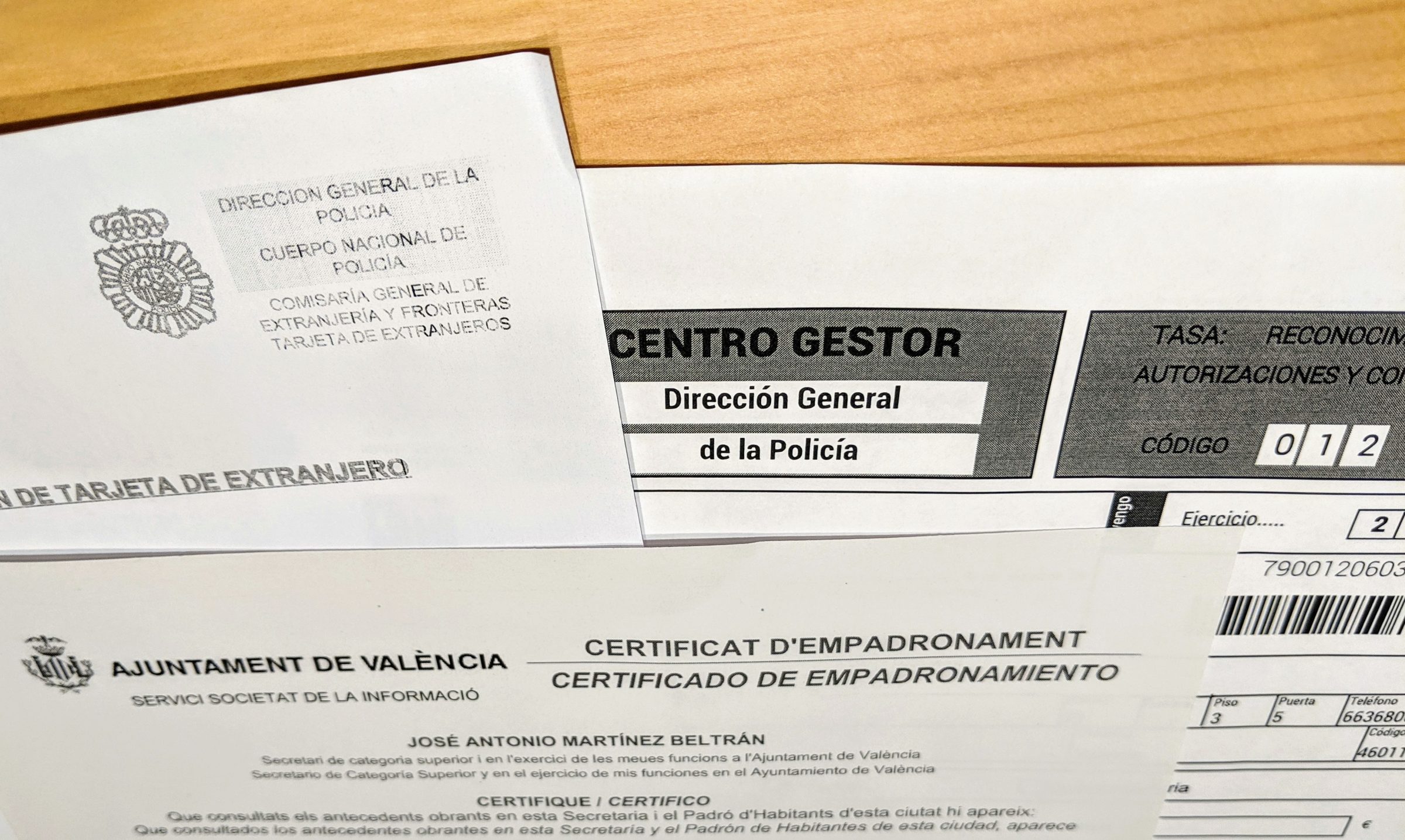
In order to get your TIE, you will most likely need to get this certificate from the City Hall first.
Not every city in Spain requires this document for a TIE but many do and here in Valencia, they definitely require it. This is basically an official certificate that shows you are registered as a resident of a particular city or town in Spain. The certificate is typically issued by the City Hall in the town or city where you plan to live in Spain.
With this official document, your life as a resident becomes much easier. Consider it official proof of residency and address, something that comes in handy when dealing with other government offices (such as the office that handles the Spanish Residency Card process).
For me, once my number was called, the process took about 5 minutes. I gave the woman behind the desk my documents, she asked a couple of quick questions (my level of education, if it was my first time registering in Spain, why I needed the certificate, etc.) and then she printed out two copies of the official certificate right then and there.
That was it. I had the Certificado de Empadronamiento and I was ready to continue the TIE process.
*If you don’t speak any Spanish, you will probably want to have a Spanish-speaking friend or contact come with you.
You can do this before you get your Certificado de Empadronamiento. The only thing to keep in mind is:
Overall, if you allow for at least 2 weeks between your appointment for your Certificado de Empadronamiento and your appointment for your TIE card, you should be good.
Appointment Wait Times
Don’t be alarmed if there are no available TIE appointments for 4 or more weeks. It’s apparently common in some cities for there to be long waits for available appointments. But even though you technically need to apply for your Spanish residency card within 30 days of arriving in Spain, it seems that this rule is ignored. In reality, it has to be ignored since it’s common to wait over a month to get an appointment! So, if the available appointments are 1 or more months away, don’t worry, just book the earliest one you can.
Here’s how to book your TIE appointment:
*Important: Be sure to save the confirmation that appears on your screen as you will absolutely need to take this confirmation paper to your appointment!
*Important: The available appointments change all the time. Keep checking. When I went on the site the first time, the earliest appointment was 4 weeks away. But then I checked one day later and suddenly appointments were available later that same week.
*Important: You need a separate appointment for each person if you are applying as a couple or family.
Here is a list of everything you need for the TIE appointment:
You’ll now need to print out the form, sign it and take it to the bank (in Spain) to pay the fee.
I was told you could go to any bank to do this but I had some difficulties. The first bank told me I could only get this done between 9:30am – 11:00am on Mondays and Thursdays, the second bank just said ‘no’ and the third bank told me to come back the next day. But then I found a tiny branch of Caixa Popular Bank and they helped me take care of it in 3 minutes. Just don’t save this part until the last second!
The current fee for the TIE is 15,74 Euros. You simply pay that amount, the banker stamps your form and you’re good to go.
Keep the stamped form as you’ll need it for your appointment.
*Get a Spanish phone number!: I use Google Fi and can use my US phone number all over the world. However, I did get a local Spanish SIM card from Vodafone so that I could list a Spanish phone number on my documents. This is important as they might not accept a foreign phone number on the forms and in the government registration system.
It’s easy though. It costs 10 EUR at Vodafone for the SIM (comes with 5 GB of data too). I never put the SIM in my phone but at least I can give out that Spanish number and I avoid confusion.
Again, if you don’t speak any Spanish, this could be a challenge to do on your own as the staff at the Valencia office didn’t speak any English. I’ve heard the same about most TIE offices in the country. You might want to bring a local friend or contact to assist.
And that’s it.
Then, after 30 days, you can go back and pick up your Spanish Residency Card. You don’t need an appointment for this, just show up and get in the appropriate line.
Good luck and if you have any questions, just let me know!
The post Spanish Residency Card (TIE): All You Need to Know appeared first on Wandering Earl.
We are glad that you preferred to contact us. Please fill our short form and one of our friendly team members will contact you back.